
World Mental Health Day - Dr Sharon Orapeleng
For World Mental Health Day (October 10), Women in Global Health Australia is proud to launch another special profiling series to highlight the incredible work of women in the mental health space.
Secretariat member Adeline Tinessia spoke with Dr Sharon Orapeleng on her journey to work as the Acting Director for Child and Youth Mental Health.
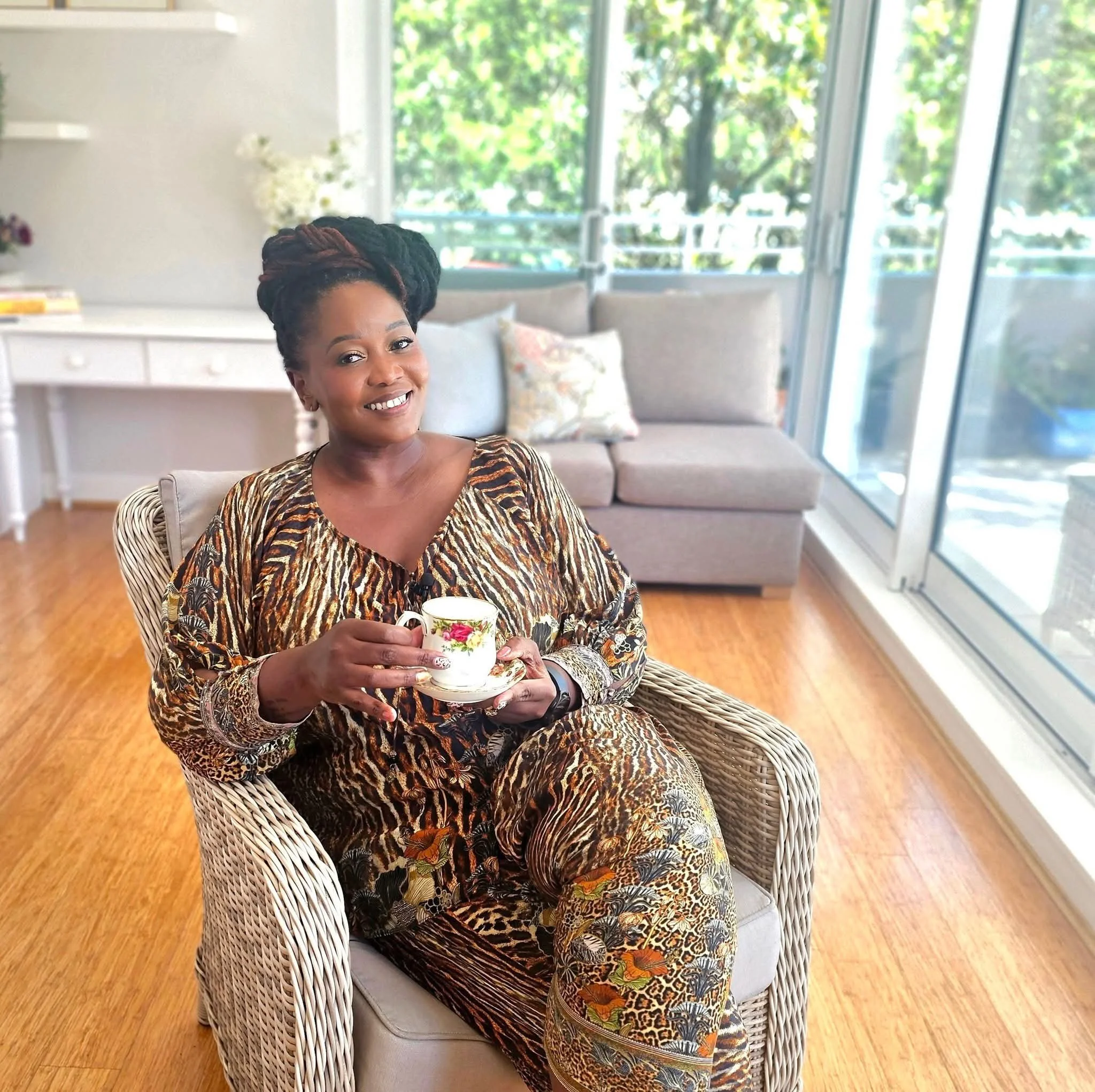
Please introduce yourself and tell us a bit about what you currently do.
My name is Sharon Orapeleng. I am a strategic policy professional with Queensland Health, currently serving as the Acting Director for Child and Youth Mental Health. In this role, I oversee key policy and service reforms to ensure children, young people, and their families receive the right care at the right time. Alongside my public sector leadership, I am a mental health advocate, consultant, and speaker deeply grounded in the African philosophy of Ubuntu—"I am because we are"—which shapes my commitment to health equity, cultural capability, and social justice.
You have a wealth of experience in Mental Health. Tell us a bit about your journey to where you got to today.
My path was shaped early on by my mother, a dedicated mental health nurse who built capability in psychiatric nursing. Growing up, I spent school holidays visiting her at Botswana’s primary referral psychiatric hospital in Lobatse. Back then, before its transition to Sbrana Psychiatric Hospital in 2009, the 180-bed unit lacked youth infrastructure, so young people were cared for alongside adults. While Mum supervised her nursing students, I spent time connecting and playing with the consumers—moments that set my path toward psychology.
At 19, I came to Australia from Botswana as an international student to study psychology at La Trobe University. After graduating, I returned home to work at the Botswana Association for Psychosocial Rehabilitation. Working alongside lead psychiatrist Dr. Sidandi with very few resources, we built integrated inpatient-to-community transition pathways—discharge planning, family psychoeducation, and operating a community hub for ongoing recovery. A year later, I returned to Australia to complete my postgraduate studies at Bond University, earning a Master’s in Behaviour Management with research focused on Autism Spectrum Disorders. I have been working for Qld Health in mental health almost 20 years in different roles. As the daughter of a mental health nurse, I know this truth: hurt happens in community, and healing happens in community. I am passionate about keeping people well in the community.
What does World Mental Health Day mean to you?
To me, World Mental Health Day is both a celebration of resilience and a call to action. It serves as a global reminder that mental health is a fundamental human right, demanding collective effort to break down stigma, address systemic inequities, and prioritize care for everyone across all life stages.
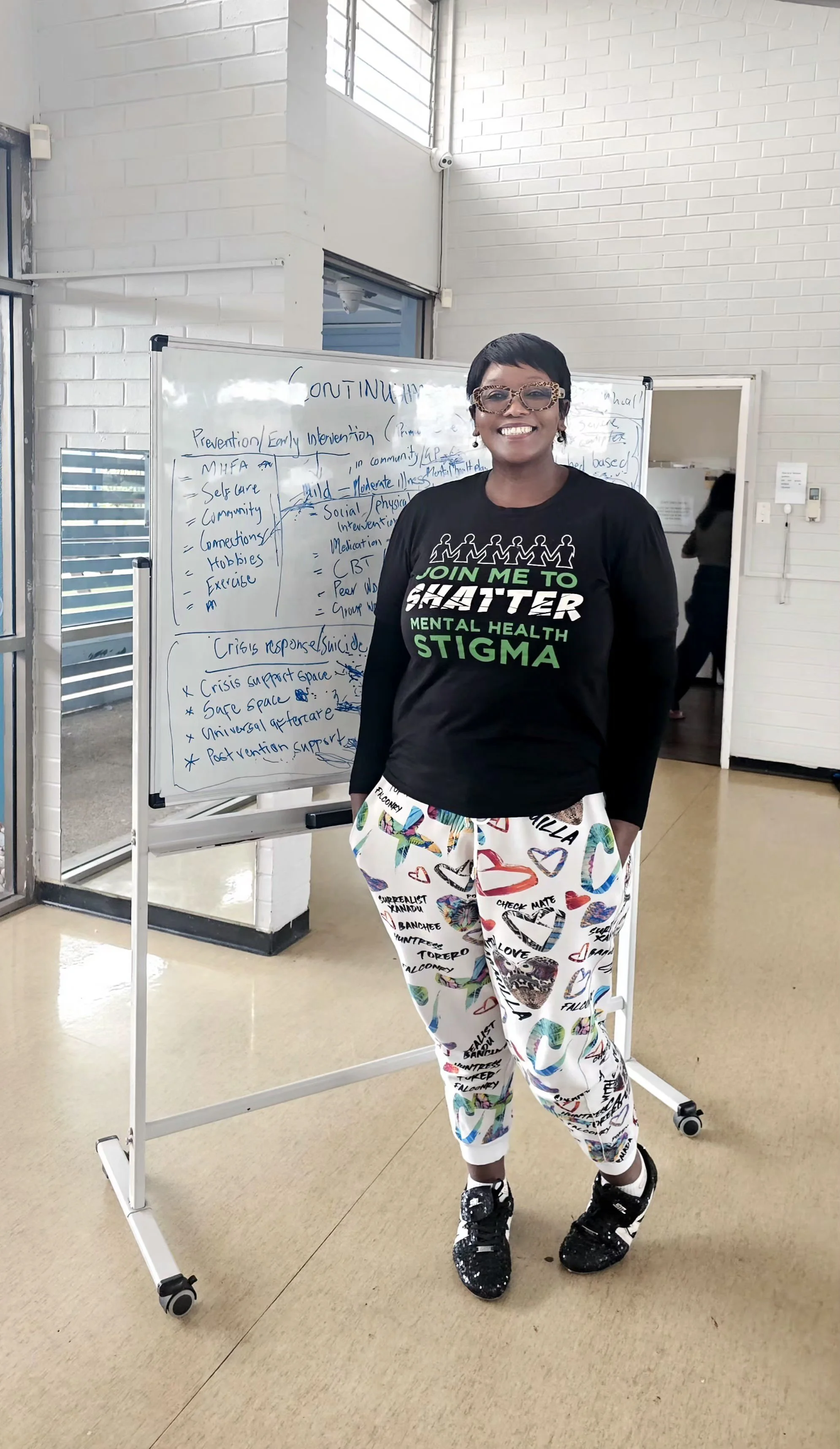
What challenges have you faced in your career, and how have you overcome them?
Navigating complex systems and spaces where diverse perspectives—particularly those of culturally diverse women—are underrepresented has required resilience and grit. I have overcome these challenges by working tirelessly, remaining anchored in Ubuntu, and fearlessly and boldly holding space at the decision-making table. When you know who you are and where you come from, you can speak boldly. Supported by community as a community leader, I draw strength from representing those voices, anchoring my policy leadership in lived experience to transform systems and make them equitable for all.
What do you believe are the most pressing issues for women in global health right now, particularly in the sphere of Mental Health?
The intersection of economic security, health inequity, and gender barriers remains critical. Women globally bear a disproportionate burden of unpaid caregiving, financial precarity, and systemic marginalization, facing deep gaps in access to culturally safe care. Beyond these structural issues, there is a pervasive stigma around women’s mental health and the damaging myth of the "strong woman" who can do it all. Women carry immense pressure without recognizing that their own tank is empty. We must normalize that you cannot pour from an empty cup—women need access to equitable systems and the safety to seek help, drop the mantle of self-reliance, and lean into their village.
What is your favourite thing about what you do?
My favorite part of this work is seeing real, tangible impact. It is receiving feedback from organizations I’ve trained that have embedded strategies from my teaching to make their workplaces genuinely psychosocially safe, leading to incredible outcomes. It is hearing from individuals who accessed our public mental health services through my encouragement and support, who return to share that they are well on their way to recovery and thriving. Ultimately, mental health is about human lives—it is about saving lives—and that profound purpose is why I have been passionately doing this work for almost 20 years.
What advice would you give to young women who want to make a positive difference globally?
Trust the power of your unique voice, heritage, and lived experience. When you know who you are, you can speak boldly and step into any space with confidence. You don't need to wait for permission to lead—work hard, anchor yourself in Ubuntu and community, and remember that driving systemic policy change globally begins with consistent, courageous acts of advocacy locally. And above all, prioritize your own well-being along the way: remember that there is no "You" without "You", so take care of your mental health first.