
Women in Global Health AustraliaBlog Series
Women, Health & Systems: What Changes When We Centre Women?
In this new Women in Global Health Australia blog series, we will explore contemporary health issues through a gender lens: from women’s health and reproductive autonomy to climate change, emerging technologies, the health workforce and leadership. Across the series, we will ask a simple but important question: what changes when we centre women

The name was wrong all along: PCOS becomes PMOS
For decades, millions of women have lived with a diagnosis that never quite made sense. Polycystic ovary syndrome, or PCOS, told women that their problem was cysts on their ovaries. But for many, the scans showed no cysts at all. Meanwhile, the exhaustion, weight changes, irregular periods, excess hair, anxiety, and insulin resistance were often brushed aside.
This is a big step toward addressingsing the gap between the name and the reality women experience. In June 2026, a global consensus published in the Lancet officially renamed PCOS to polyendocrine metabolic ovarian syndrome, or PMOS. It is a small change in letters but a big shift in how the world will understand and treat a condition that affects more than 170 million women, or about one in eight, worldwide.
Why the old name failed women
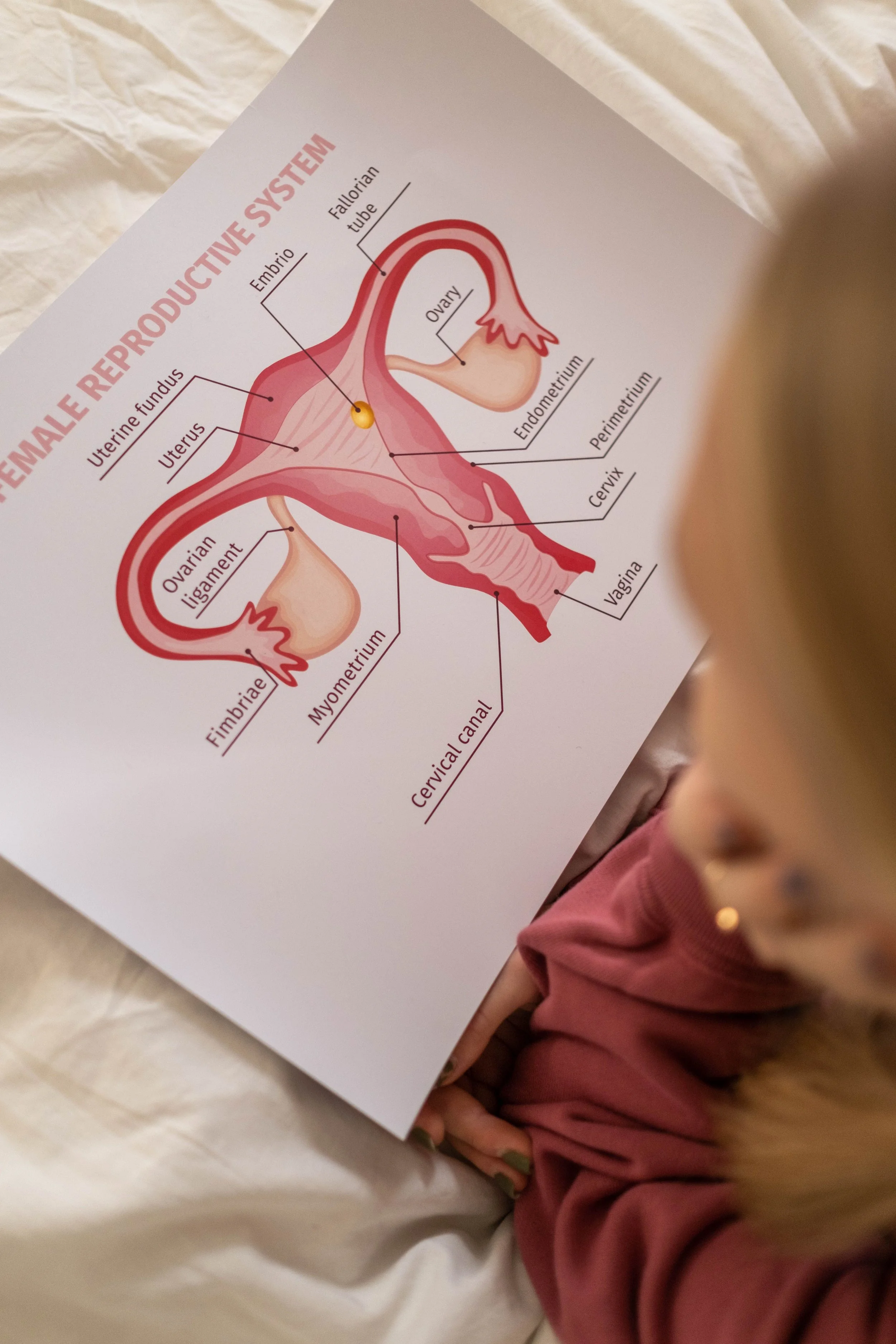
The word "polycystic" put the focus on ovarian cysts. However, what is seen on an ultrasound in some women with this condition is actually an increased number of underdeveloped immature follicles, not conventional cysts. It is a complex hormonal and metabolic condition that touches the whole body: the ovaries, yes, but also the brain, the pancreas, the skin, and long-term heart health.
The old name also risked narrowing the conversation. By putting “ovary” at the centre, many women spent years searching for ovarian cysts that were not the real issue. This left other aspects of the condition, including metabolic, cardiovascular, psychological and long-term health risks, in the background, and the actual drivers of their symptoms went undiagnosed and untreated. Insulin resistance, for example, shows up in most people with the condition, even those at a healthy weight. Left unaddressed, it raises the risk of type 2 diabetes, high blood pressure, and cardiovascular disease. Under the old name, this metabolic side of the condition was too often an afterthought behind period problems and fertility concerns.
The old name also carried stigma. "Polycystic" and "ovary" framed the condition as a reproductive issue, which left out anyone not focused on fertility and made the condition harder to talk about openly.
The new name attempts to correct that imbalance. “Polyendocrine” points to the condition's wider hormonal effects. “Metabolic” acknowledges its important relationship with metabolic health. And “ovarian” remains because the ovaries and reproductive function are still an important part of the syndrome. In other words, PMOS does not mean that the ovaries no longer matter. It means they no longer have to tell the whole story.
How the change came about
This was not a quick decision. It followed years of collaborative global effort, led by Prof Helena Teede at Monash University (an early member of Women in Global Health Australia). It brought together 56 clinical, academic, and patient organisations. Researchers ran Delphi surveys and workshops and gathered input from more than 14,000 people with the condition and health professionals across every region of the world.
The process was built around a clear set of principles: the name had to be scientifically accurate, easy to understand, free of stigma, culturally appropriate, and practical to put into practice across healthcare systems and research. Out of that process, three terms rose to the top: polyendocrine, metabolic, and ovarian. Together they became PMOS.
Professor Teede described it as a landmark moment, one that was driven by and for the people affected by the condition, and one that finally reflects how complex it really is.
What actually changes
PMOS is expected to fully enter international clinical guidelines only by 2028, so this will take time to filter through health systems, insurance forms, and prescriptions. For now, most people will still see PCOS on their medical records, and a name change on its own does not change diagnostic criteria or treatment.
However, names influence what we notice; it shapes how conditions are researched, funded, taught in medical schools, and talked about between doctors and patients. A name that finally reflects the hormonal, metabolic, and ovarian dimensions of the condition opens the door to better research funding, earlier diagnosis, and care that treats the whole person rather than just the reproductive system.
Why this matters for global health
This story is ultimately about much more than a label. It shows what happens when a condition affecting a huge number of women is described by a name that does not fit the science. Delayed diagnosis. Fragmented care. Stigma. Years of women being told their symptoms were not serious, or not connected, or not real. It also reflects a community rallying to make change.
The renaming of PCOS to PMOS reminds us that language in medicine is not just academic. It shapes who gets believed, who gets treated properly, and who gets left to work it out on their own. Changing the name will not by itself fix gaps in diagnosis or care. However, it creates an opportunity to change the conversation - in medical education, research, healthcare policy and clinical care. For those of us working in global health, perhaps that is the most important lesson; when patients and researchers are brought into the same conversation from the start, language can become a tool for change.
Dr Zohra Lassi
Associate Professor, Maternal and Adolescent Health Equity
Robinson Research Institute
School of Public Health
Adelaide University
Committee Member
Women in Global Health Australia
Dr Jodie Avery
Associate Professor
Research Co-Lead, Chronic Reproductive Conditions
Robinson Research Institute
School of Medicine
Adelaide University