
National Reconciliation Week 2026 - A/Prof Robyn Williams
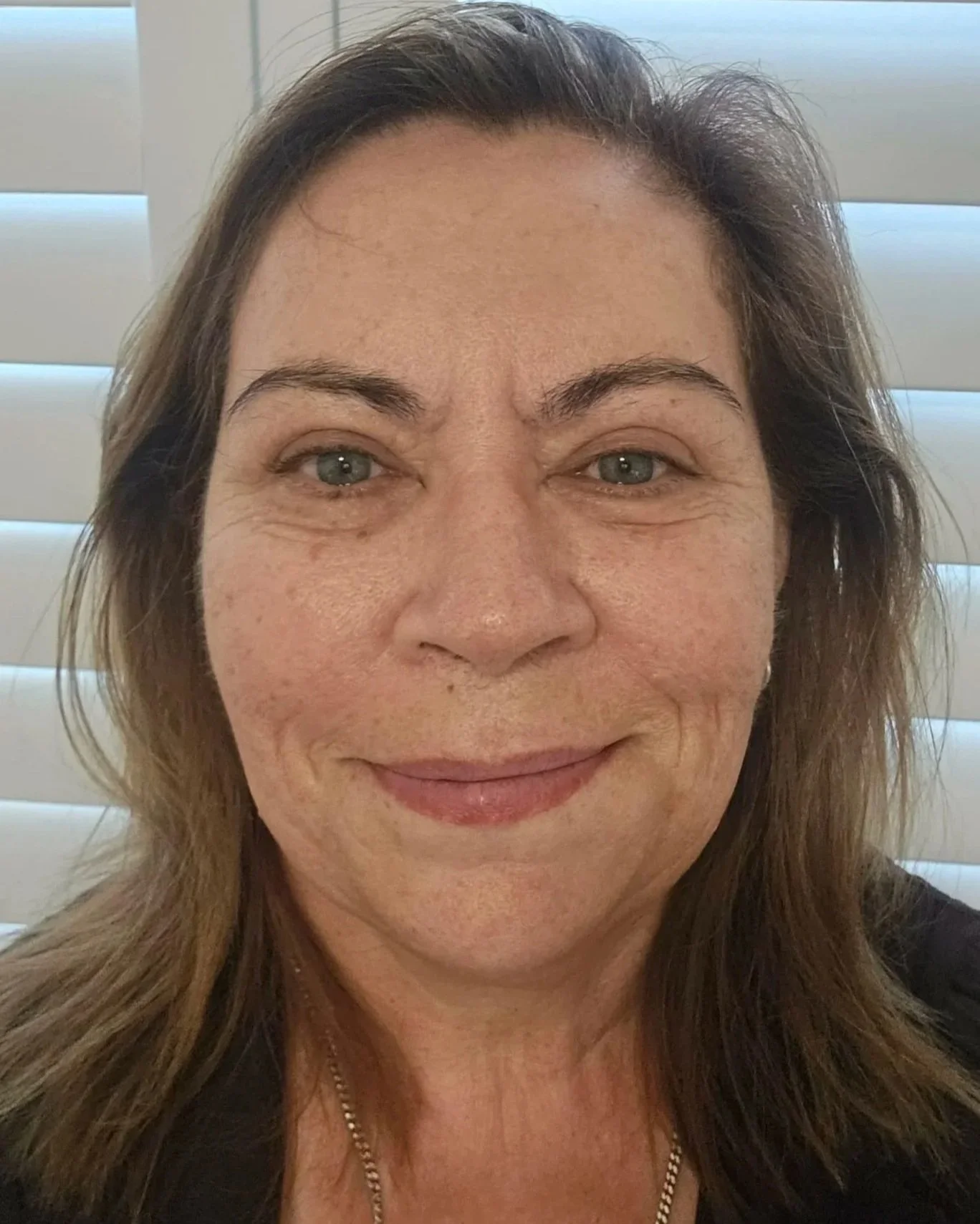
For National Reconciliation Week 2026 (May 27th – June 3rd), Women in Global Health Australia is honoured to feature a profiling series to highlight the incredible work of indigenous women in health policy and research.
Committee Member Prof Jaya Dantas interviewed Associate Professor Robyn Williams, a Menang Noongar yorga (woman) who has made extensive contributions to Indigenous Health, in particular in researching and destigmatising Fetal Alcohol Spectrum Disorder (FASD).
Please tell us a bit about yourself and about your mob and connections to First Nation people.
I am a Minang Noongar yorga (woman) with moort (family) connections spanning Noongar, Yamatji, Nykina, Gooniyandi and Bunuba peoples. I come from a large family network and generous culture, and my love of story was shaped by growing up among many gifted Aboriginal storytellers.
I am also an Associate Professor and Senior Research Fellow at the Medical School, Curtin University. As the first in my family to access higher education, I developed a strong commitment to decolonising research and working alongside community. My early immersion in story and Aboriginal knowledge systems continues to guide my work, informing Aboriginal‑led approaches that challenge Western research norms and uphold the voices, priorities, and sovereignty of Aboriginal peoples.
You have a wealth of experience in Indigenous Health. Tell us a bit about your journey to where you got to today?
At 17, I began my career at the Marribank Aboriginal Family Centre, formerly the old Carrolup Native Settlement in the Southwest of Western Australia. Carrolup was “home” to many Aboriginal children during the Stolen Generations and the birthplace of the renowned Aboriginal child artists. After losing my father at a young age, I experienced firsthand the therapeutic strengths of Aboriginal culture and community as part of my own healing journey. A few years later, my Elders and family encouraged me to attend university, reassuring me that I would be fine. I was doubtful, having not completed senior high school, but trusted their guidance and enrolled as a mature‑age student. Their belief in me shaped the foundation of my career and continues to guide my commitment to community‑led research and Aboriginal health.
My academic journey included a BA in Sociology and Anthropology, followed by Masters and Doctoral studies, all completed while working in community, and Aboriginal Community Controlled Organisations. Staying connected to community ensured my learning remained grounded in real priorities and practice. These roles broadened my networks, strengthened my commitment to community‑led research, and shaped my pathway into academia. Throughout this journey, I was supported by incredible Aboriginal and non‑Aboriginal Australian and international mentors whose diverse experiences and guidance were central to my development and continue to influence my approach to culturally grounded scholarship.
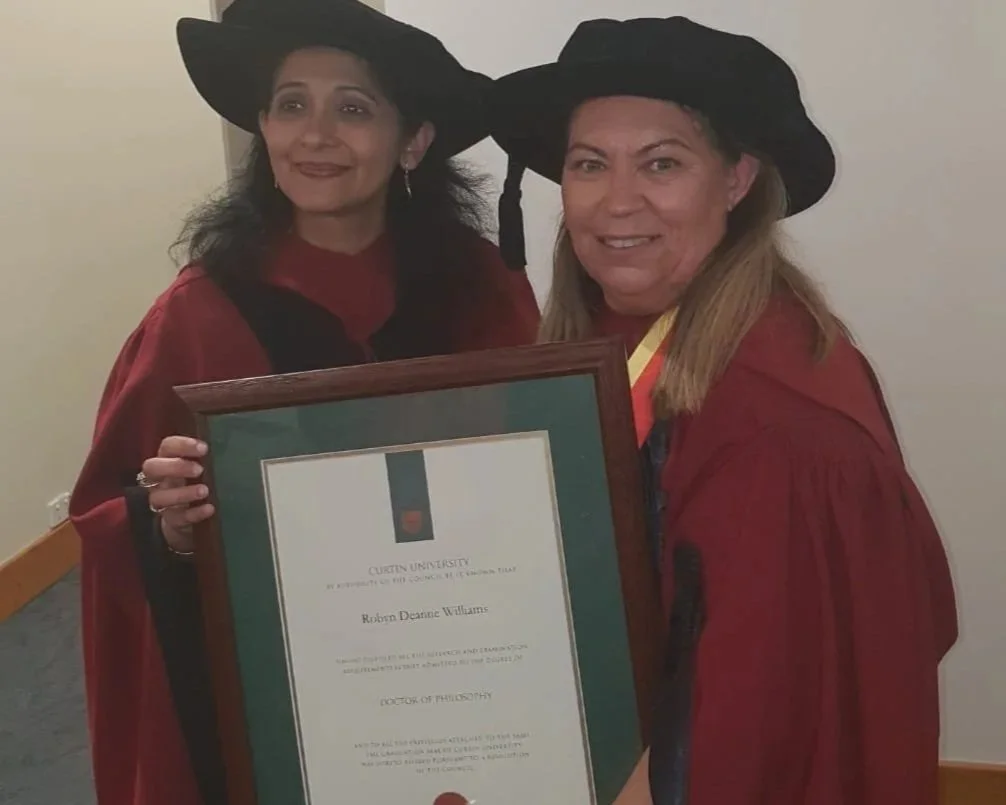
2019: Primary Supervisor Professor Jaya Dantas and Robyn Williams, PhD Graduation Ceremony. Received Chancellor’s Commendation for doctoral thesis Understanding FASD through the Stories of Noongar families and how can this inform policy and service delivery.
What does Reconciliation Week mean to you?
Reconciliation Week, for me, is about laying strong and sustainable foundations for learning, truth‑telling (past and present), and shared understanding. It is a time to deepen our collective knowledge of Aboriginal histories, cultures, and lived realities, and to ensure that this learning leads to meaningful action. Reconciliation is not a single week of activity but an ongoing commitment to creating change, strengthening relationships, and improving outcomes for our communities. It is about ensuring that the stories, experiences, and aspirations of Aboriginal peoples are heard, respected, and embedded in the way we move forward together.
What challenges have you faced in your career, and how have you overcome them?
Each stage of my academic journey has brought its own challenges, and I’ve been able to navigate them with the support of my family, community, and a commitment to improving outcomes for Aboriginal and non‑Aboriginal people with possible FASD. Support from the research school at Curtin University helped me manage these demands, and academic scholarships made this path possible by recognising the value of community‑driven research and cultural leadership early in my career.
At times, the isolation of academia felt as tough as preparing national competitive grant applications. Being on Country continues to ground and recharge me, strengthening the cultural foundations that guide my work. With cultural grounding, support from Curtin, and guidance from those who walked this path before me, these challenges became much easier to manage.
What do you believe are the most pressing issues for women in global health right now?
Prevention of Fetal Alcohol Spectrum Disorder (FASD), and support for young mothers and their young children, are among the most pressing issues for women and children in global health. FASD is a significant global health concern, made more complex by stigma, limited awareness, and inconsistent policy and service responses. Addressing this requires adequate resources for young women particularly those experiencing social or structural disadvantage, to access culturally safe antenatal care, parenting support, and early childhood services. Strengthening prevention, reducing stigma, and ensuring wrap‑around support for mothers and their children are critical steps toward improving health outcomes and breaking intergenerational cycles of disadvantage throughout the world.
What is your favorite thing about what you do?
My favourite parts of this work include spending time with community on Country across Australia, engaging in two‑way learning, and reciprocating the support and mentoring I have received. I value opportunities to co‑design FASD training with community and to develop new pilot programs focused on FASD prevention and intervention and initiatives grounded in cultural strengths and designed to support parents, children, and community wellbeing. This work also offers important contributions to mainstream disability and FASD approaches. Seeing the leadership and capacity building emerging through Aboriginal‑led research teams has been one of the most rewarding aspects of my career, reflecting the strength of community‑driven research and the impact of two‑way learning in practice.
What advice would you give to young women and gender‑diverse people who want to make a positive difference globally?
My advice would be to work closely with your community and advocate strongly for local priorities that are identified and led by community. This includes lobbying for improved resources and services that genuinely reflect community needs. Learn as much as you can about your topic of concern to strengthen your confidence and your advocacy. Research can also be used as a powerful platform to support these efforts by providing evidence to advocate for policy change and increased resourcing. Along the way, acknowledge the little wins to sustain your journey toward improving outcomes and making an important difference in the everyday lives of your community.
